
“Without matter there is no space or time.”1— the late Dr. Albert Einstein, theoretical physicist
For as long as I can remember, I’ve had the idea to create animated productions. When I decided to forge ahead with writing a bunch of books on fringy science, human history, mythology, and so forth, I stayed aware of advancements in animation technology, intending to make worthy documentaries to support the books.
AI is powering ahead with all kinds of content manipulation tools so this was a logical place to look for an edge. This article will address some of the challenges and highlights of putting together an AI-powered animated “podcast”.
I love the idea of using clever music to set a mood. I’m not even an R&B fan but somehow I wrote lyrics and asked the AI to make it better. AI gave me music and vocals that I never could replicate myself, though I added my own touches on guitar as well for the final mix. The podcast suddenly had a theme track.
Creating consistent characters was easier said than done. It’s currently difficult to maintain scene cohesion, even with detailed prompts. I haven’t found a way to guarantee characters will retain each and every feature from scene to scene. To me it seems the AI gets lazy the longer you push it. Everything from clothes and hair has to be accounted for.
I did not ask for my AI copy of wildlife biologist, the late John Bindernagel, to have a man-bun. It just gave him one. But that was never in the prompts.
On top of appearance, I found it impossible to create a character with a convincing personality. I had the right voices but not the type of depth that a human would have. It’s pure luck or despair what AI decides to give you, no matter the emphasis or non-emphasis. AI wants to do more rather than less, even if it’s not asked for.
The late Dr. John Bindernagel is most well known as an older guy. But I always figured that in his heyday in the 1960s, he was a surfer guy. So I took the oldest photo of him that I could find and updated him in the spacetime realm as a young man. Behold, a young John Bindernagel.
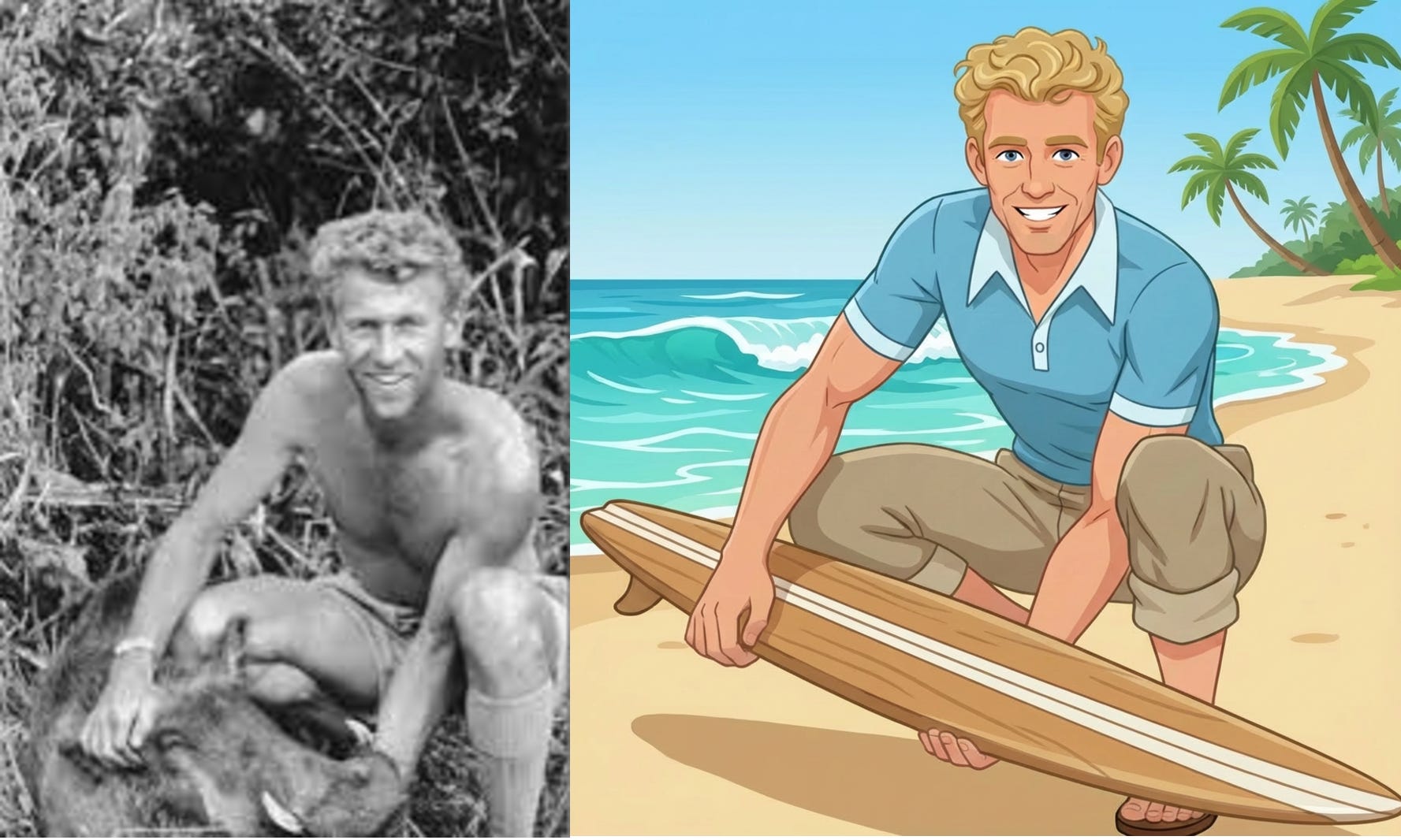
As I kept building his character, the AI seemed to want to make him appear like a hipster of today in his 20s. But that is not the personality I gave him and nor did he display the mannerisms I wanted on the show. Regrettably, it is one of many glitches and issues I had to bypass fixing in favor of tackling harder problems.
I ran into similar issues establishing Ivan Sanderson. I didn’t want to go too young with Ivan as his age is what gives him distinction. I found that playing with a character’s age in prompts gives unpredictable results. It depends how much patience you have to fine tune your images, tweak outputs, use more tools, and basically hack your way to getting the animation you want.
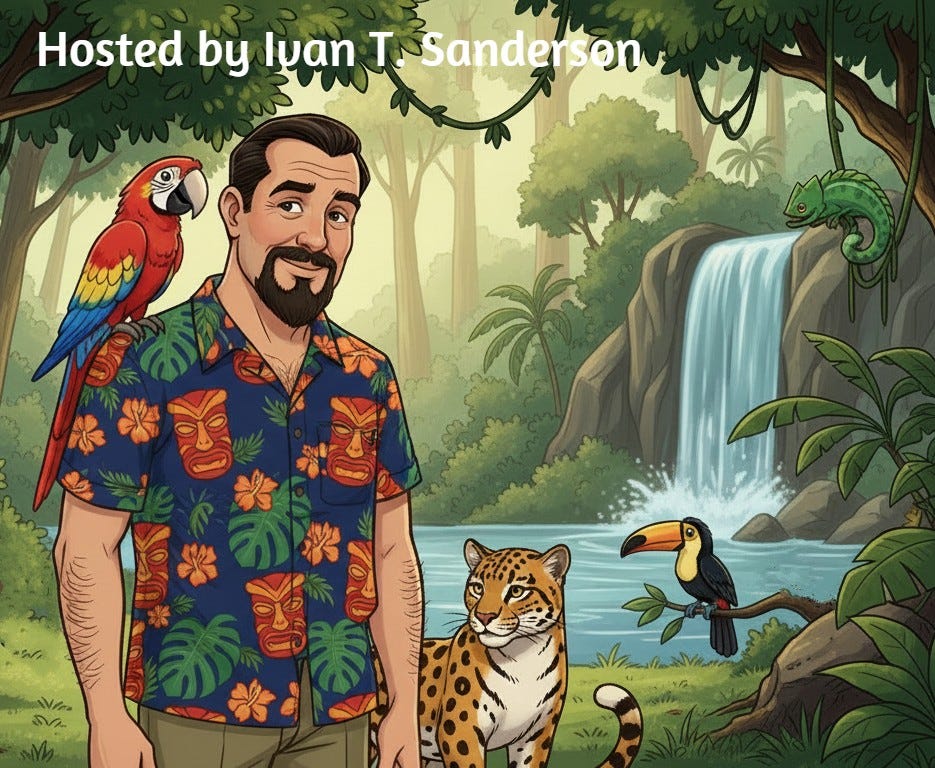
Character consistency is much better than it was a few months ago. I’m sure it will get better a short time from now. I am betting it will eventually handle multiple characters in a scene fluidly, which is unpredictable right now when producing long form content.
I am however, encouraged by the music and lyrical syncs. I will be doing more of that.
I hope you enjoy episode 1!
Note: I used so many different tools in making the animation that I refrained from mentioning them in this article.Einstein, Albert “A brief outline of the development of the theory of relativity.” Nature, no. 106, 1921, pp. 782–784.


