

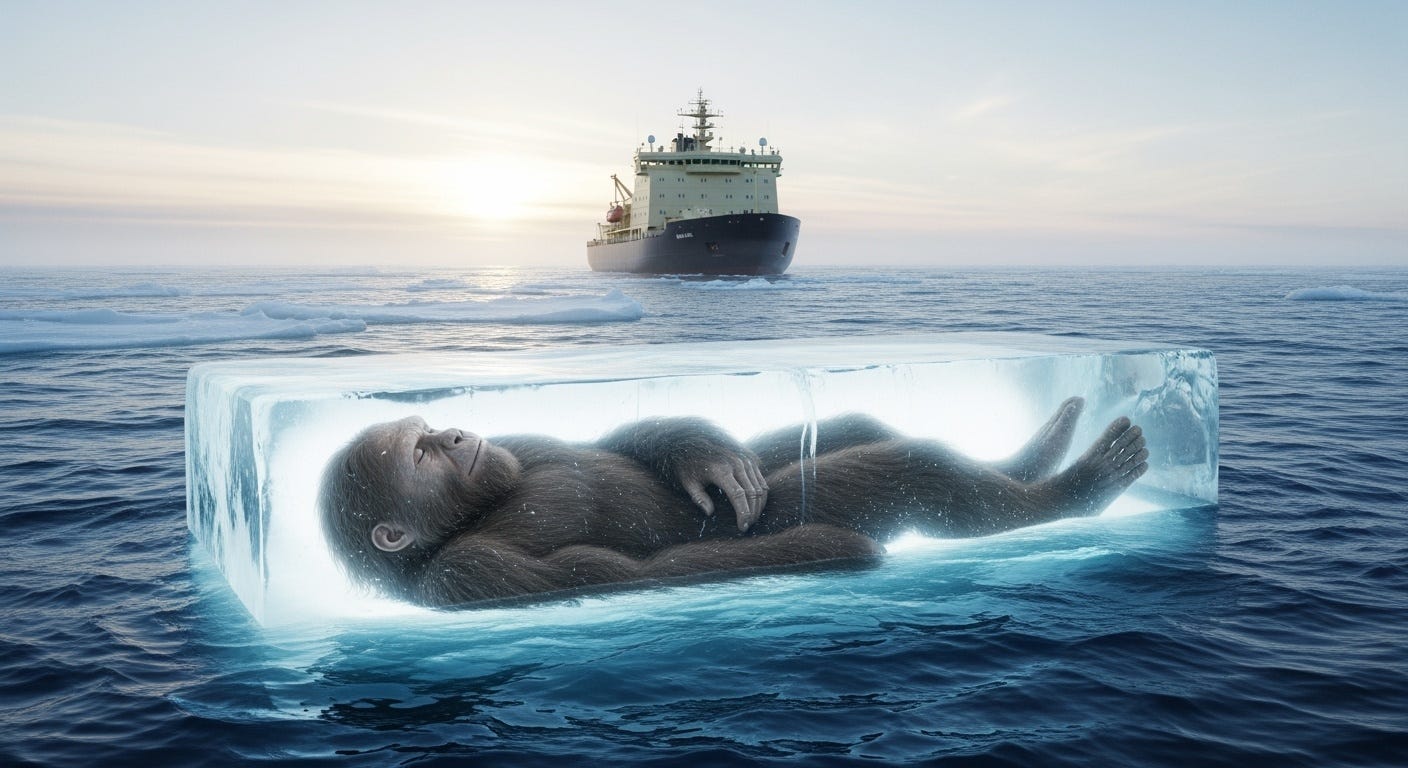
Long before the internet, if you wanted to learn something, you had to find a library OR, the nearest store that stocked magazines. From as early as newsprint was around, being a story writer meant you could connect with a large volume of readers comparable to today’s popular topics on social media.
Ivan T. Sanderson became a leader in writing about fringe topics. He would type out the stories that his readers informed him of by way of telephone and postal mail and then add his own analysis. He only published stories he believed in. This approach appealed to readers who also wanted to believe the odd topics he was writing about were real. There were a few writers of the era with the same influence. This same business model has lasted through today. A corporation based in Los Angeles had the foresight to own that market. In the 1990s, Art Bell’s Dreamland and then today’s Coast 2 Coast AM with George Noory have more or less had the largest broadcasts pointed directly at the fringe.
Sanderson felt pressure to produce something tangible to his readers. The hope was, the next great story could be physically proven. Sanderson carried his typewriter with him and went wherever he felt it was worth chasing stories. It was not a surprise in 1968 when Sanderson and Bernard Heuvelmans traveled to Rollingstone Minnesota to investigate a taxidermic being encased in a block of ice.
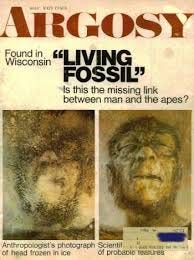
The iceman was a county fair exhibit. It’s true origins are unknown but the iceman ended up with a guy named Frank D. Hanson who charged a small fee as an exhibit.
Hanson would not allow it to be defrosted to examine. He felt the pressure of Sanderson and Heuvelmans’ bursting enthusiasm to proclaim the iceman as authentic to a national audience. So Sanderson and Heuvelmans conducted as much investigation as they could manage from within the refrigerated trailer on Hanson’s property. Sanderson was so convinced of the iceman’s authenticity that he drew sketches and planned on presenting them on the Tonight Show with Johnny Carson. Sanderson considered the iceman to be the missing link of human evolution. Heuvelmans would write an academic paper, arguing the iceman was a strain of Neanderthal with its own place in a taxonomy.
At the time, much was still unknown about Neanderthals and the differences with Homo sapiens. Authors like Myra Shackley drew attention to the possibilities of Neanderthals’ role in human evolution.
Today, there is a formula of serving intriguing and scary stories to audiences who want and expect that sort of entertainment. Bigfoot fiction is a winner in terms of merchandising. The iceman was never taken seriously by Johnny Carson’s audience or science of any era. It is easily debunked but remains memorable as having an impact on people’s sense of prehistoric history as a human species.
The chase for cryptid evidence always ends up crashing to earth. Especially when we’re talking about a county fair exhibit of taxidermy in a block of ice.
Ivan Sanderson was looking for evidence to solidify a Darwinian perspective of human evolution so it could be owned by the West. And as we’ll learn in a future blog, it was the Soviets of the East who set direction for world cryptid investigation.


